
Top Signs You Need Chimney Cleaning Service – Don’t Ignore These
If you can smell your chimney when the fireplace isn’t running, you’re already past the “schedule soon” stage. That odor is creosote volatilizing into your living space, and it means deposits inside the flue have built up enough to off-gas at room temperature. Most homeowners wait for visible soot or smoke rolling into the room, but those are late-stage indicators. The signs that matter show up earlier, in how the system drafts, how the firebox smells, and what’s happening on the surfaces you can actually see. Here’s how to read them before they turn into a repair bill.
If you’d rather have trained eyes on it than crawl around with a flashlight, call (844) 443-3825. We answer 24/7. Fast dispatch from 7am to 7pm, Sunday through Friday.
Why the Obvious Signs Are the Wrong Ones to Watch For
The trouble with waiting for smoke in the room or a visible soot stain is that by the time either appears, the chimney has usually been telling you something for months. A chimney is a system that moves air, and air movement degrades gradually. Soot is what’s left after the system has already been struggling.
In our experience across Mission Viejo, the homeowners who end up with the biggest repair bills aren’t the ones who burned the most wood. They’re the ones who never learned what a struggling draft feels like, or who wrote off a smell as “just what fireplaces do.” A swept chimney and a safe chimney aren’t always the same thing. The early signs below are the ones an inspection is built to catch, which is why we treat inspection as a standalone service: we document what we find before recommending any repair.
Sign 1: Your Fire Is Sluggish and Needs Constant Tending
A fire that smolders, needs the door cracked open, or dies down the moment you stop poking it is usually a draft problem, not a wood problem. Dry, well-seasoned wood should light and hold a flame with normal tending. If yours won’t, the chimney isn’t pulling air the way it should. Restricted draft pushes smoke back into the room, and it also lets creosote condense faster on cooler flue walls.
Mission Viejo homes have a few specific reasons for weak draft:
- Tight, well-sealed houses. Modern construction and weatherstripping leave little air infiltration, so the fire competes with the house for combustion air and the chimney can’t establish a strong upward pull.
- Short or offset flues. Some single-story layouts and additions create flues that are shorter than ideal or take a bend, and both reduce draft.
- Obstructions. Nests, leaves, and debris at the cap or inside the flue cut airflow directly. This is common in Mission Viejo chimneys that sit unused through the mild months.
- Negative pressure. A kitchen or bath exhaust fan running while the fire is lit can pull air down the flue instead of up.
If your fire needs help to breathe, that’s your first clue to book a chimney sweep and an inspection before the next burning season.
Sign 2: The Three Creosote Stages, and What You’ll Actually Notice
Creosote builds in three recognizable stages, and how far along yours is tells you how urgently the flue needs attention. You don’t need a camera to spot the first two.
Stage 1: Soot and Flaky Creosote
This is the dusty, flaky, gray-black coating you’d expect to see on the firebox walls and the lower flue. It brushes off easily and is the normal result of regular burning. A routine sweep handles it. If this is all you see, you’re likely on a normal maintenance schedule.
Stage 2: Glazed Creosote
Stage 2 looks like a shiny, hardened, tar-like coating that has bonded to the flue walls. From the firebox opening, you can sometimes see a glossy black sheen further up the flue with a strong light. Glazing means the creosote condensed wet and dried hard, and it does not brush away. It’s also the stage where a standard sweep alone won’t fix the problem; the surfaces may need resurfacing or relining. This is where HeatShield resurfacing comes in, a specialty repair most sweep-only companies can’t offer.
Stage 3: The Point of No Return
Stage 3 is a thick, hardened glaze, often with visible buildup narrowing the flue opening. At this stage the chimney is a genuine fire-risk system and typically needs professional intervention before it can be safely used again. You won’t always see Stage 3 from below, which is exactly why an inspection with a camera matters.
Sign 3: Odor When the Fireplace Is Off
Not all fireplace smells mean the same thing. The two you’re most likely to notice tell different stories about urgency.
A musty, damp, or earthy smell usually points to moisture. Water is getting into the chimney, often through a failing crown, a cracked cap, or degraded mortar, and the flue or smoke chamber is staying damp. That’s a repair signal more than a cleaning signal, and it’s the kind of problem that quietly rots masonry over time.
A sharp, acrid, tar-like smell, especially on a warm day when the fireplace has been cold for weeks, is creosote volatilizing. This is the smell that tells you deposits are heavy enough to release fumes into the living space. If you can smell your chimney when it’s not running, schedule service now rather than at the end of the season. Cleaning and an inspection should happen together, because odor alone can’t tell you which stage of creosote you’re dealing with.
Sign 4: Lightly Used Doesn’t Mean Clean – The Mission Viejo Trap
Mild winters and infrequent fires create a false sense of safety. A lot of Mission Viejo homeowners burn a handful of times a year and reasonably assume the chimney is fine. But creosote isn’t the only thing that builds up in a chimney, and a lightly used flue has its own set of problems.
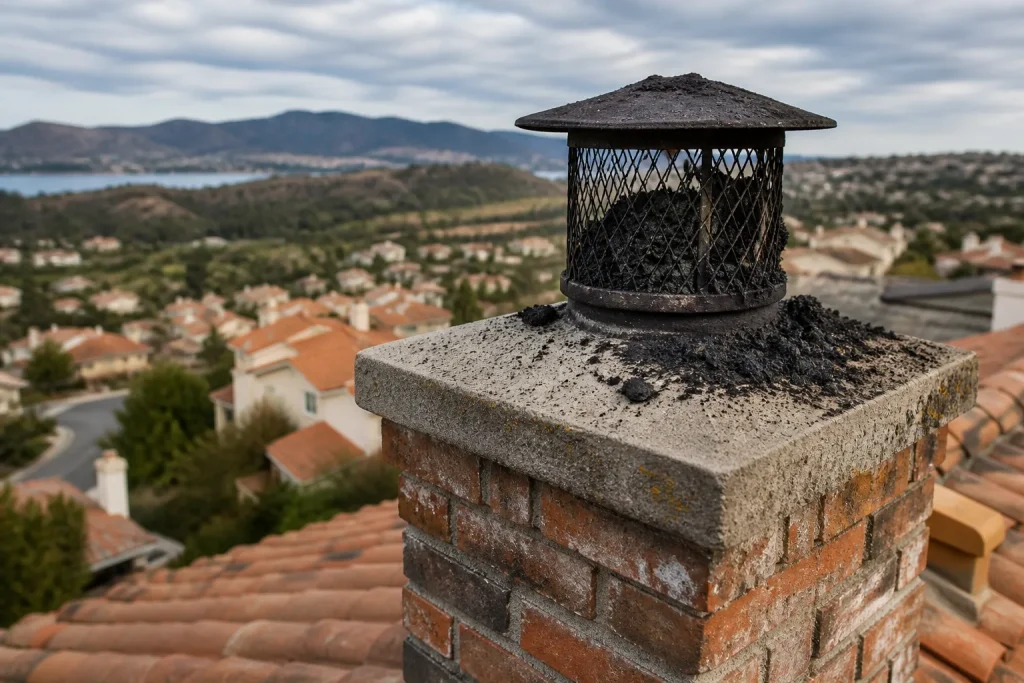
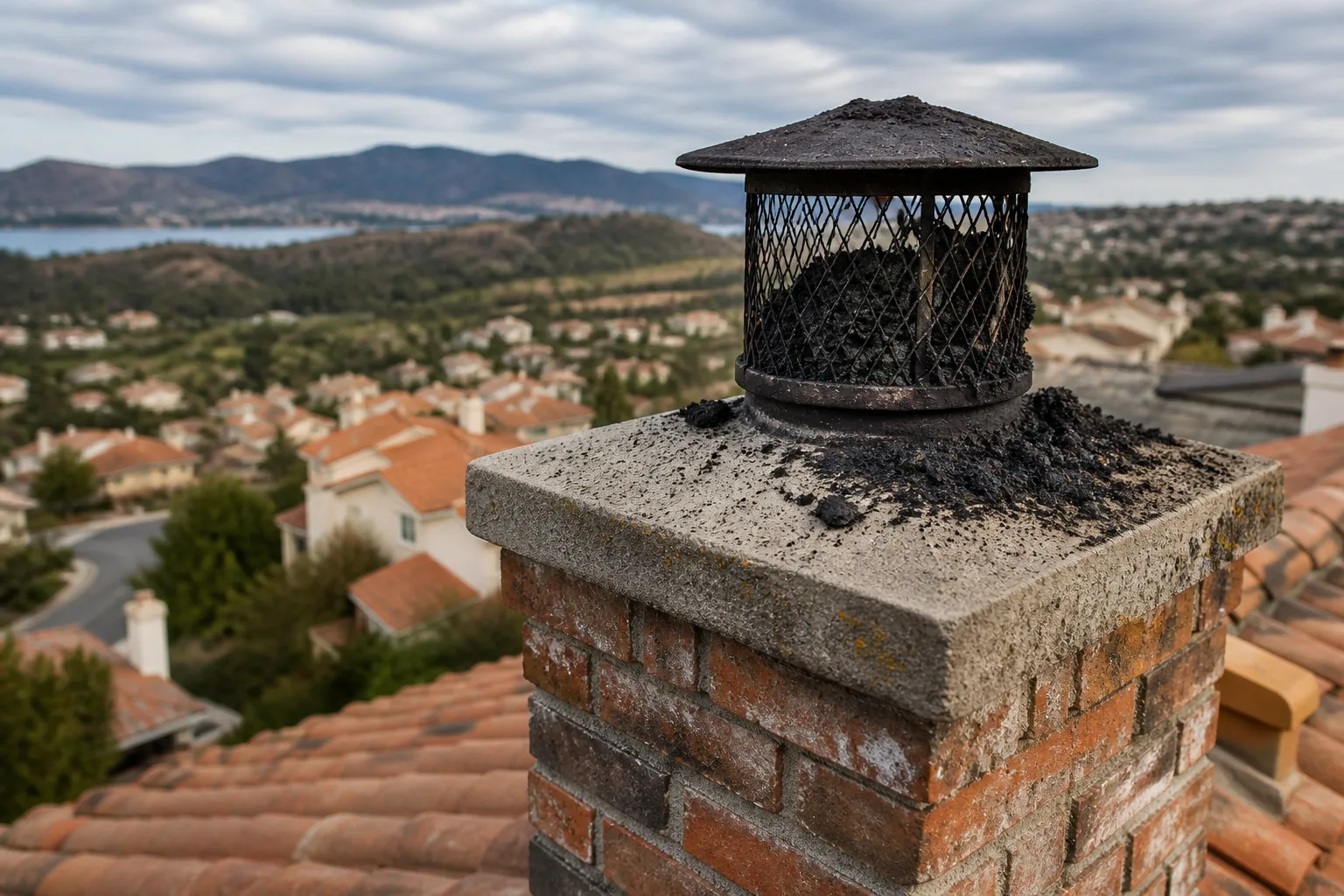
When a chimney sits idle for months, animals find it. Birds and squirrels get past a damaged or missing cap and build nests in the flue. Moisture works its way into masonry and mortar joints, degrading the structure from the inside. Rain enters an open flue and the smoke chamber stays damp. A neglected cap and crown is often the root cause, which is why cap and crown work matters even in a warm climate. We install Gelco and Famco caps and crowns rated for long-term weather resistance, because the top of the system is where most water damage starts. If you’ve inherited a chimney you’ve never had looked at, “it hasn’t been used much” is a reason to inspect it, not a reason to skip it.
Sign 5: What the Firebox Itself Is Telling You
Before you call anyone, spend five minutes with a flashlight at the firebox. A few visible conditions tell a technician a lot:
- Spalling firebrick. Firebrick that’s cracked, crumbling, or flaking off at the surface is losing its ability to protect the masonry behind it. Firebox repair is a common follow-on to a neglected system.
- White efflorescence on the smoke shelf or firebox walls. That chalky white powder is a sign of moisture moving through masonry. It’s a water intrusion clue, not a cosmetic one.
- Deteriorating mortar joints. Soft, recessed, or crumbling mortar between bricks signals water damage and needs attention before the structure weakens further.
- Glossy black coating on flue walls visible above the damper, which suggests Stage 2 glazed creosote.
If you’re seeing any of these, it’s time for a professional look, and possibly fireplace repair along with the sweep.
When to Call a Pro
If you’ve read this far and any one of these signs matched, call. A chimney is one of the few systems in your home that can look fine from the living room and still be a genuine fire or carbon monoxide hazard. We don’t tell you what you need without showing you why. Inspection findings are documented with photo evidence, not a verbal estimate, and we say plainly when work can safely wait. That’s the whole point of a diagnosis-first approach to a full-system chimney specialist. Our technicians have up to 10 years of experience, and the same company that inspects also repairs, so there’s no handoff to a third party who never saw your chimney.
Related services in Mission Viejo: routine chimney sweep, fireplace repair, and full chimney repair, all handled by Mission Viejo Chimney Sweep Pros. Professional-grade materials – DuraFlex liners, HeatShield resurfacing, Gelco caps – not hardware-store substitutes.
The Bottom Line
The signs worth acting on aren’t the dramatic ones. A sluggish fire, a smell when the fireplace is cold, white powder on the smoke shelf, or a chimney that’s sat unused through too many mild Mission Viejo seasons are the indicators that actually matter. Creosote builds in stages, moisture works in quietly, and a lightly used chimney still collects animals and water damage. Don’t wait for visible soot or smoke in the room to tell you what a slow draft and a musty smell already are.
If you’re in Mission Viejo and need help reading any of these signs, Mission Viejo Chimney Sweep Pros offers free estimates. Call (844) 443-3825. We answer 24/7. Fast dispatch from 7am to 7pm, Sunday through Friday. A written estimate sets the final price before any work begins.
Frequently Asked Questions
Most wood-burning chimneys should be swept once a year or whenever creosote reaches about an eighth of an inch. A lightly used Mission Viejo chimney can often go longer between sweeps, but an annual inspection is still worth doing to catch moisture damage, animal debris, and failing mortar before they become expensive. Call (844) 443-3825 for an exact quote – estimates are free.
Glazed creosote (Stage 2) looks like a shiny, hardened, tar-like coating bonded to the flue walls. You can sometimes see a glossy black sheen with a strong light aimed up the flue from the firebox opening, but a camera inspection is the reliable way to confirm it. Glazed creosote won’t brush away and often calls for HeatShield resurfacing. Call (844) 443-3825 for an exact quote – estimates are free.
Not without an inspection. A chimney can look fine from the living room and still have creosote buildup, a blocked flue, or failing masonry hidden inside. A standalone inspection documents the condition with photo evidence before you burn again. Call (844) 443-3825 for an exact quote – estimates are free.
Nothing dramatic happens most days, which is exactly the trap. Creosote keeps building, moisture keeps finding its way into masonry, and a nest or debris can restrict the flue without any obvious warning. The risk is a chimney fire or carbon monoxide intrusion that you won’t see coming. If you’re unsure whether your Mission Viejo chimney can wait, call (844) 443-3825 and we’ll document what we find before recommending any repair. Estimates are free.
Yes. We provide a written estimate before any work begins, and the estimate is free. Call (844) 443-3825. We answer 24/7. Fast dispatch from 7am to 7pm, Sunday through Friday.
Written by the team at Mission Viejo Chimney Sweep Pros.
Need Chimney Cleaning Help?
Call Mission Viejo Chimney Sweep Pros - the local pro we connect you with is licensed and insured, with free written estimates in Mission Viejo.
(844) 443-3825